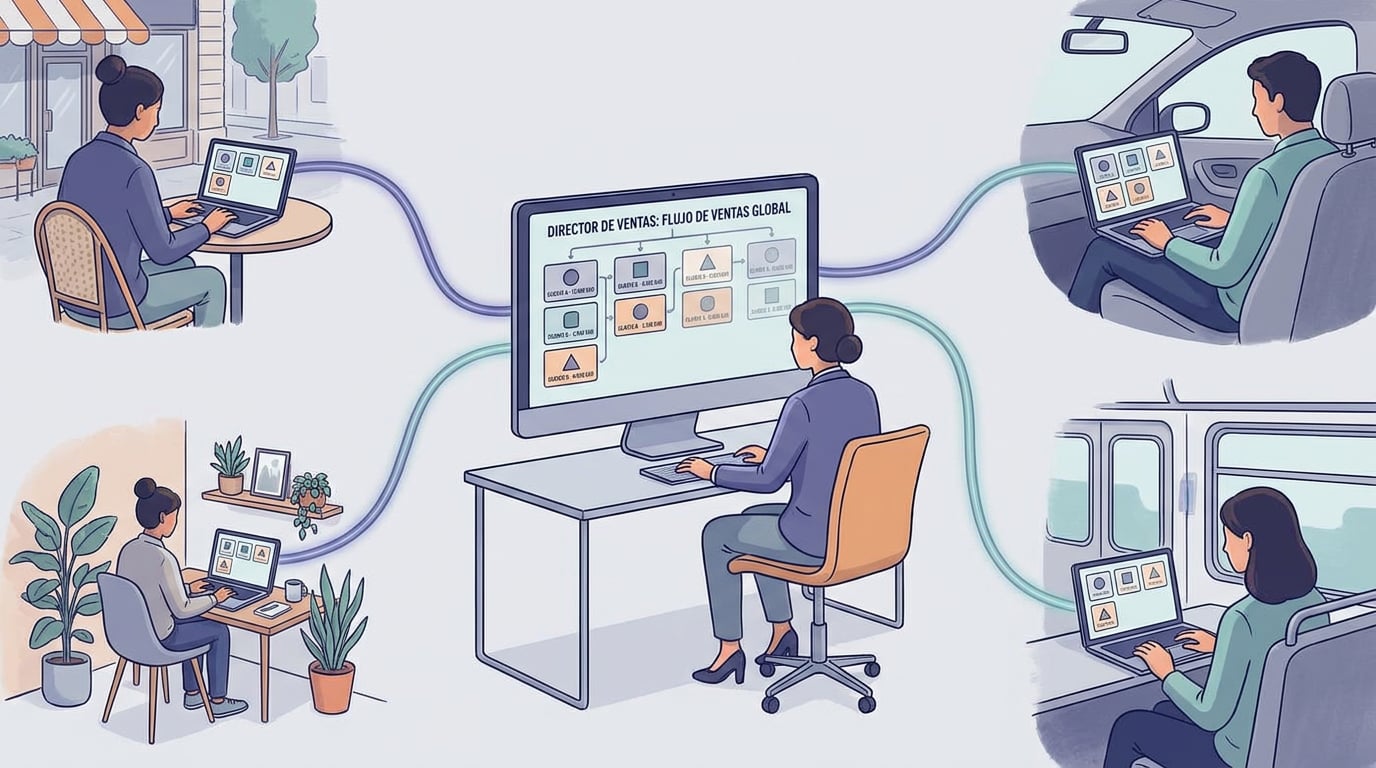
Someone on your team pasted a customer's email into an AI chat this morning to have the reply drafted. They did not ask for permission, because nobody told them permission was needed. If an inspector asks, six months from now, what AI training you gave your staff, what do you show them?
That question stopped being rhetorical on 2 August 2026, when national market surveillance authorities across the European Union became operational. And there is one article — the fourth — that has been in force for over a year and that almost nobody has dealt with.

What Article 4 actually says
Article 4 of the EU AI Act (Regulation (EU) 2024/1689) requires providers and deployers of AI systems to take measures supporting the AI literacy of their staff and of anyone operating those systems on their behalf. It has applied since 2 February 2025.
The word that matters is "deployers". You do not need to build AI. Using it is enough. If your team works with a corporate assistant, with a copilotAI CopilotAI Assistant integrated into work tools inside your office suite, or with any tool that has AI under the hood, your company is in scope.
What changed in July 2026 — and why it helps you
The Digital Omnibus on AI, Regulation (EU) 2026/1744, was published in the Official Journal on 24 July 2026 and entered into force on 27 July. It rewrote Article 4 and turned it into an obligation of effort rather than of result.
The original wording asked you to take measures to ensure a sufficient level of AI literacy. The amended wording asks you to take measures that support its development. In practice:
- You do not have to guarantee that any particular employee reaches a specific level of knowledge. The text says so explicitly.
- You do have to act: adopt measures, adapt them to each person's technical knowledge, experience, education and context of use, and be able to demonstrate that you did.
In other words, the problem stops being pedagogical and becomes documentary. Nobody is going to examine your staff. They are going to ask for the file.
What does not count as evidence
- "We covered it in a meeting." With no record, it did not happen.
- A PDF sent by email. It proves nobody opened it, let alone understood it.
- A generic one-hour talk. Not adapted to context, and it treats the person drafting emails and the person handling staff data as if they had the same exposure.
- Training only the IT department. The obligation covers the people who use the systems — which today is most of the office.
What does work
A measure that holds up has four traits: it is role-specific, it is assessed, it leaves a dated record, and it is repeated whenever the tool, the internal policy or the law changes.

"Role-specific" is not regulatory decoration. Someone in HR using AI to screen applications is operating where decisions affect people's rights, and needs to know things that someone summarising meeting notes does not. That is why serious training is organised into tracks.
How we solved it
We built a course in NAiOS Academy designed specifically to produce that file: "IA con criterio · AI literacy (Art. 4 AI Act)". Its design decisions are the ones we consider defensible:
- Tool-agnostic. It works whether your company runs Claude, Copilot, ChatGPT Enterprise or Gemini. It is not a manual for our product.
- Five role tracks: all staff, heavy users, sensitive areas (HR, legal, finance, compliance), management, and IT. Two to six hours depending on the track.
- 13 chapters and 83 lessons, each with audio narration as well as text, so it can be followed from a phone.
- Real assessment: initial diagnostic, per-chapter questions and a final case-based exam with a 75% pass mark.
- Certificate with a verifiable code and QR, plus a record of dates, scores, course version and completed exercises. That record is the file.
- Annual refresher of around 30 minutes, or sooner if something relevant changes.
Language availability, stated plainly
The course is currently available in Spanish only. Our team at NAiOS Labs is working on the other language versions and expects them in a matter of weeks. We would rather tell you that up front than sell you a seat today for a course your team cannot follow.
You can already review the full syllabus here: IA con criterio · Alfabetización en IA (art. 4 AI Act). Pricing starts at €30 per person. If you want the English, French, German or Portuguese version as soon as it ships, tell us through the contact page and we will let you know the moment it is live — and which language we should prioritise.
What this course does not do
Worth saying, because the sector is full of cheerful promises: no course, on its own, certifies that your company complies with the AI Act. Article 4 is satisfied by a set of measures, and training is one of them. You will still need, at least:
- A written and communicated internal AI use policy.
- An inventory of the AI tools in use across the company, including the ones nobody approved.
- A record of evidence you can actually show.
Note that enforcement is national: each Member State designates its own market surveillance authority, and the practical expectations on documentation may differ between countries. The obligation, however, is the same across the Union.
In short
- Article 4 has applied since February 2025 to whoever uses AI, not only to whoever builds it.
- Since July 2026 it is formally an obligation of effort: you are not required to guarantee knowledge, you are required to act and to prove it.
- Since August 2026 national market surveillance authorities are operational.
- A talk with no record is not evidence. Role-based, assessed, dated training with a certificate is.
- Our course is tool-agnostic, starts at €30 per person, and is in Spanish today with more languages weeks away.
Sources
- Regulation (EU) 2026/1744 (Digital Omnibus on AI) — official text on EUR-Lex amending Regulation (EU) 2024/1689.
- EU AI Act, Article 4: AI literacy — article text and context.
- The Digital Omnibus rewrites Article 4 of the AI Act — analysis of the shift from result to effort.
- Cuatrecasas: the Digital Omnibus on AI is published — legal analysis of the changes (in Spanish).
This article is informational and does not constitute legal advice.