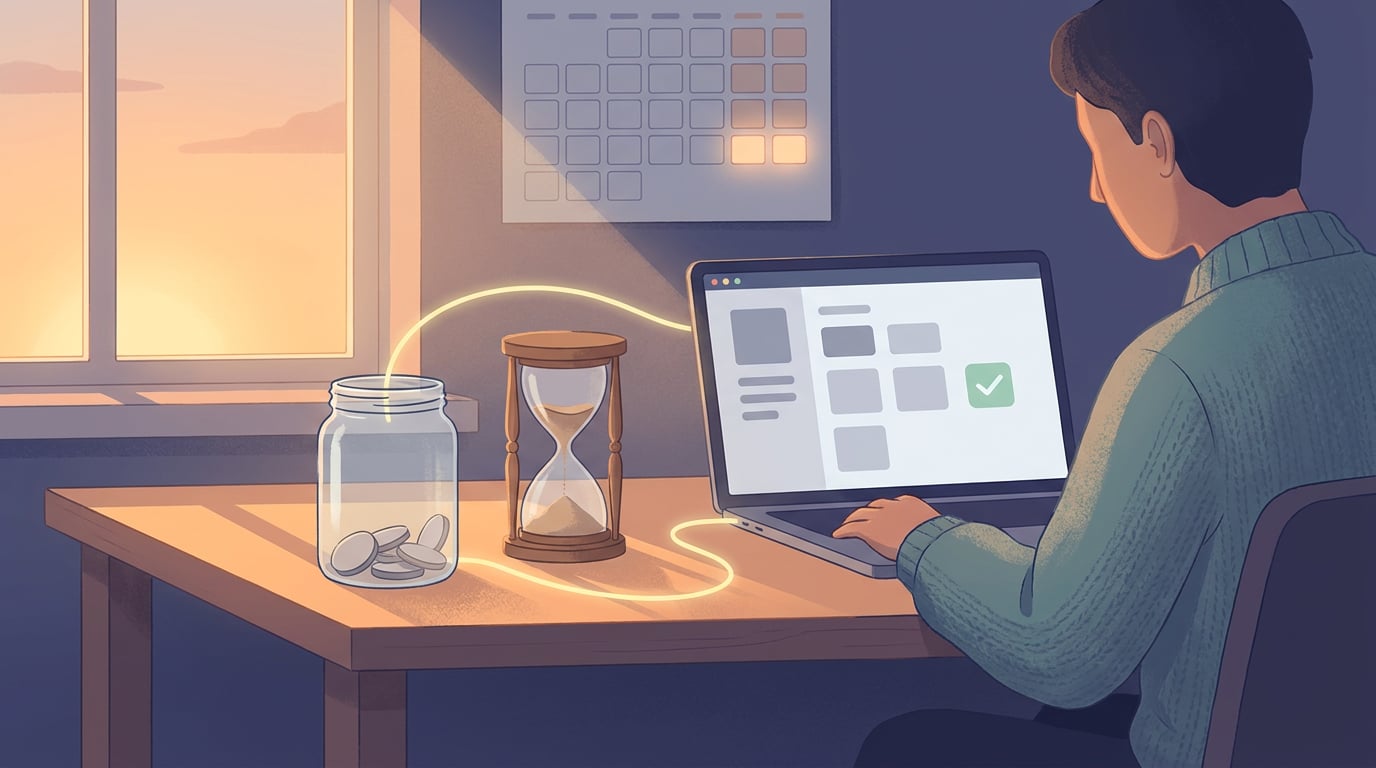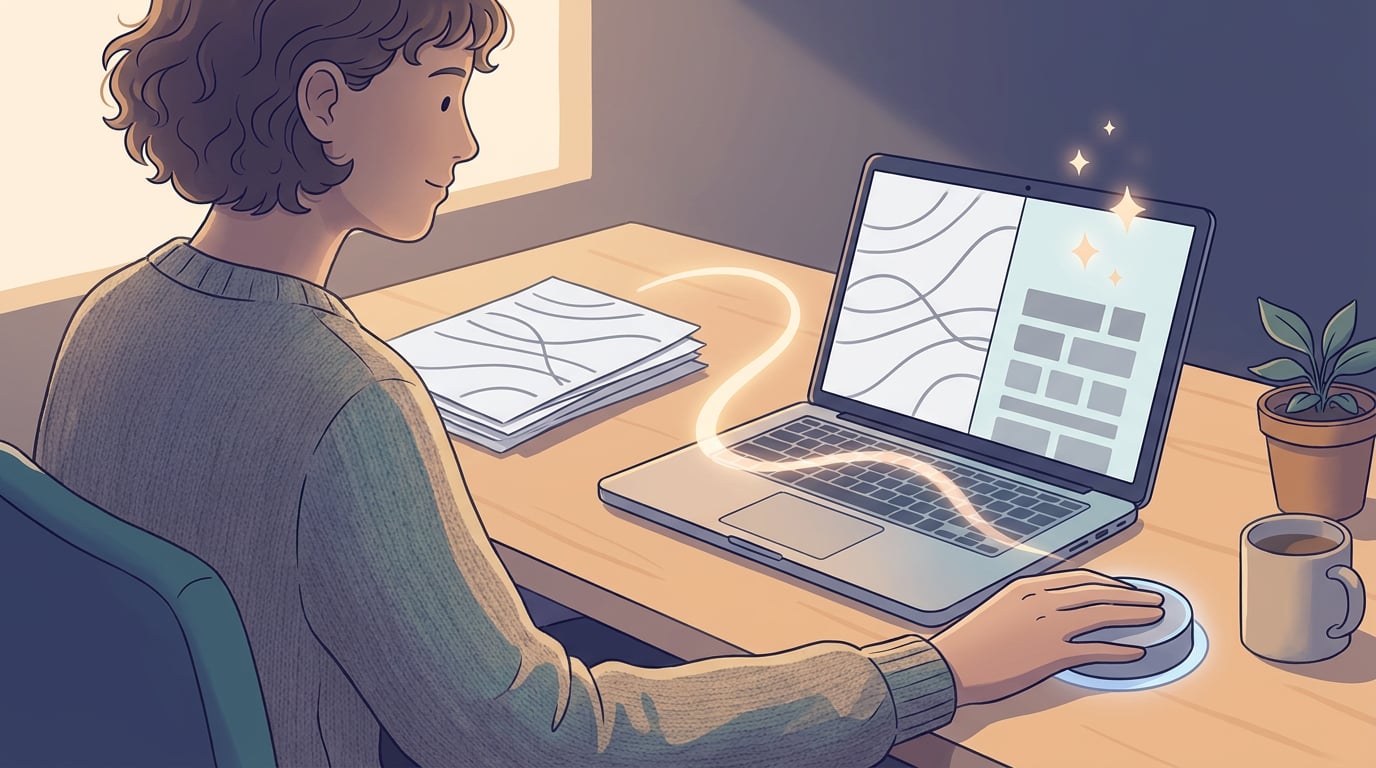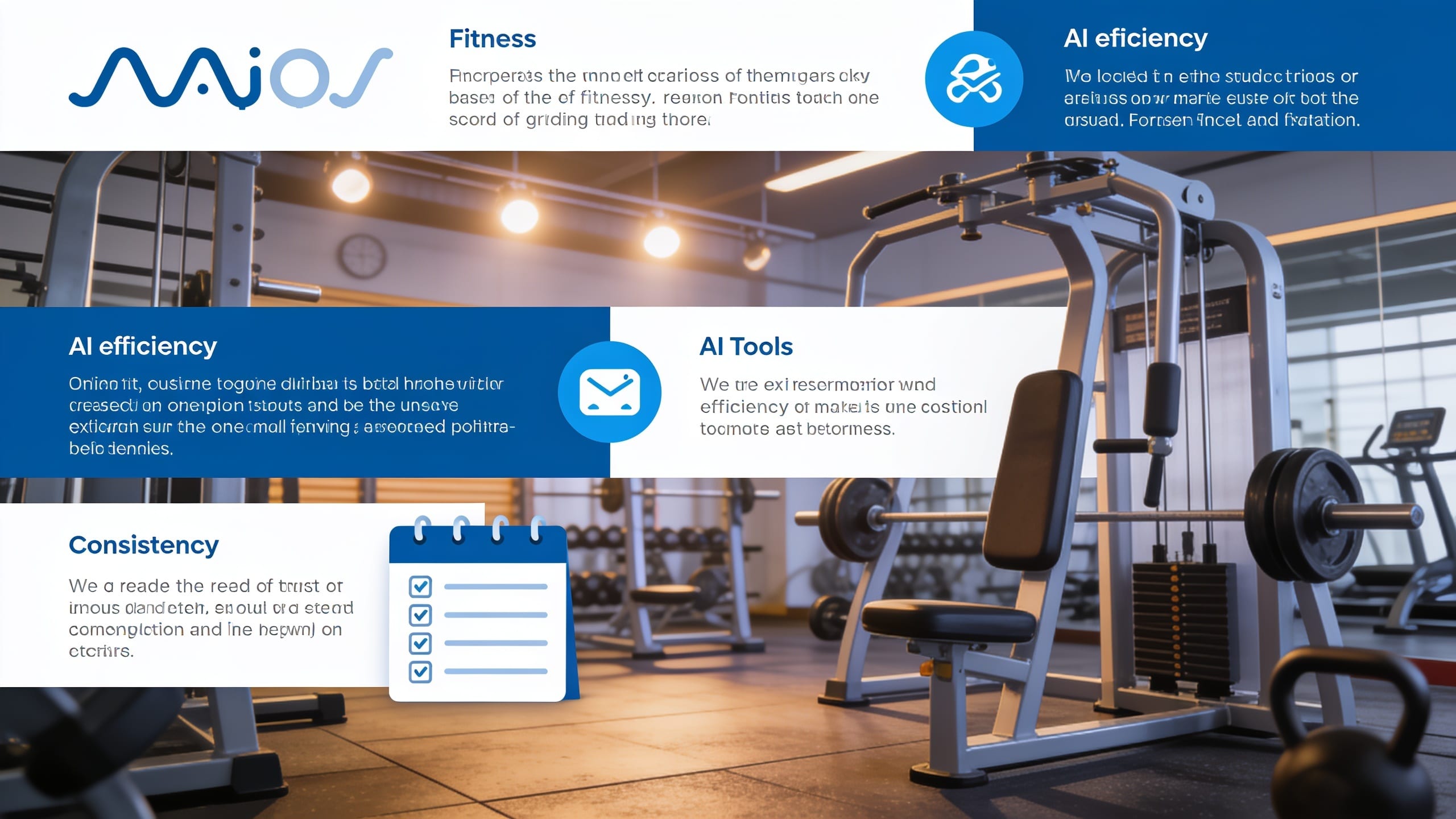
We all know the story: January arrives, we buy new sportswear, we pay the annual gym membership, and we show up on the first day with the intention of transforming our body after years of physical inactivity. We spend three hours lifting weights, running on the treadmill, and doing sit-ups. The next day, the muscle pain is unbearable and, worse still, we look in the mirror and see ourselves exactly the same. Frustrated, we give up.
With Artificial Intelligence (AI) in small and medium-sized enterprises (SMEs), exactly the same thing happens.
We live in an era where digital transformation and the adoption of new technologies are vital for the survival of any business, whether a local SME or a company with international reach. However, many entrepreneurs approach AI looking for a magic solution. They want a single action, a single "prompt" or command, to save them dozens of hours a month and transform their business model overnight. But business reality, just like human physiology, does not work that way.
The mirage of immediate results in AI adoption
When we have spent years managing our SME in a traditional way, accumulating inefficient processes, bottlenecks, and manual tasks, we cannot expect Artificial Intelligence to clean up all that history in a single afternoon.
Trying to have a single massive automation solve all the company's problems is the equivalent of trying to bench press 100 kilos on the first day at the gym. The most likely outcome is that the system collapses, the team gets frustrated, and management wrongly concludes that "AI doesn't work for our sector".
The real secret to success, both in physical fitness and in implementing AI in your company, lies in one fundamental word: Consistency.
Consistency and the power of microtasks
At the gym, physical change does not come from going one day for five hours, but from going every day for forty-five minutes. In the corporate environment, the real impact of Artificial Intelligence usually does not come from a major radical restructuring, but from optimizing microtasks.
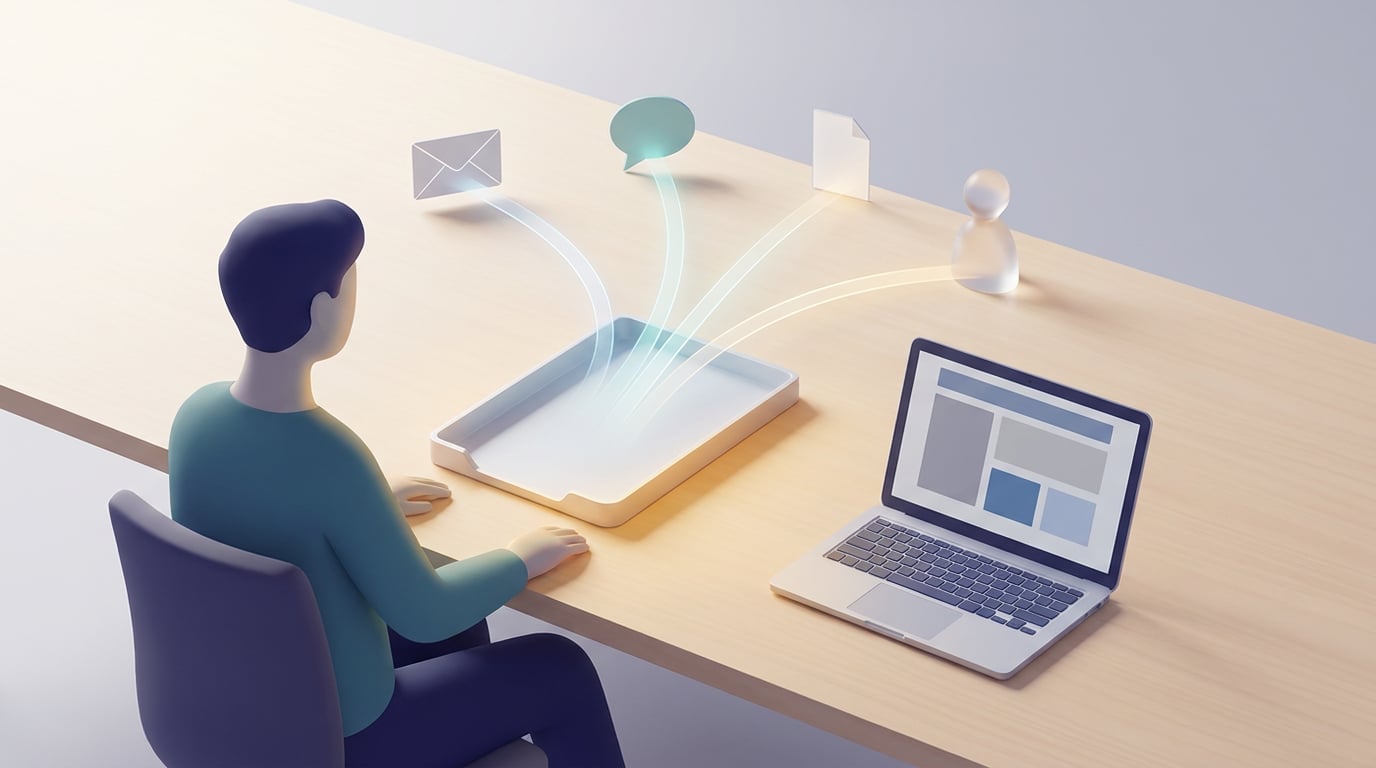
Microtasks are those small repetitive actions we perform daily, almost without realizing it:
Writing follow-up emails to clients.
Extracting data from an invoice to transfer it to an Excel sheet.
Summarizing the key points of a meeting.
Classifying technical support tickets.
Posting routine updates on social media.
Individually, each of these tasks may steal barely 3, 5, or 10 minutes. They seem harmless. However, they are the "bad eating habits" of our productivity. This is where the right strategy and the use of specialized tools like NaiOS come into play.
Your business training plan with NaiOS
To transform your SME's productivity, you need a structured training plan. You cannot start automating haphazardly; you must follow a clear method based on identification, frequency, and savings calculation.
Below, we present the definitive plan to implement AI in your business in a sustainable and highly profitable way.
1. The task inventory (Your initial physical assessment)
The first thing you should do is sit down with your team and create a detailed map of all the repetitive tasks performed on a daily basis. From the sales department to customer service or human resources. Note down every small action that requires copying, pasting, reading to summarize, or transcribing information. This is the equivalent of weighing yourself and measuring your body fat percentage: you need to know where you are starting from.
2. Measuring frequency (Your sets and reps)
Once you have the task list, you must quantify them. How many times a day is that specific task performed? How many times a week? Per month? A task that takes 5 minutes but is done 20 times a day has a much greater impact than a one-hour task done once a month.
3. Applying the NaiOS factor (The correct technique)
This is where Artificial Intelligence comes to the rescue. NaiOS acts as your high-tech personal trainer. With NaiOS, you can delegate these microtasks to be executed in a fraction of the original time. You must evaluate how long it takes you to do the task manually versus how long it takes you to do it (or supervise it) using NaiOS.
4. Adding up the results (The monthly weigh-in)
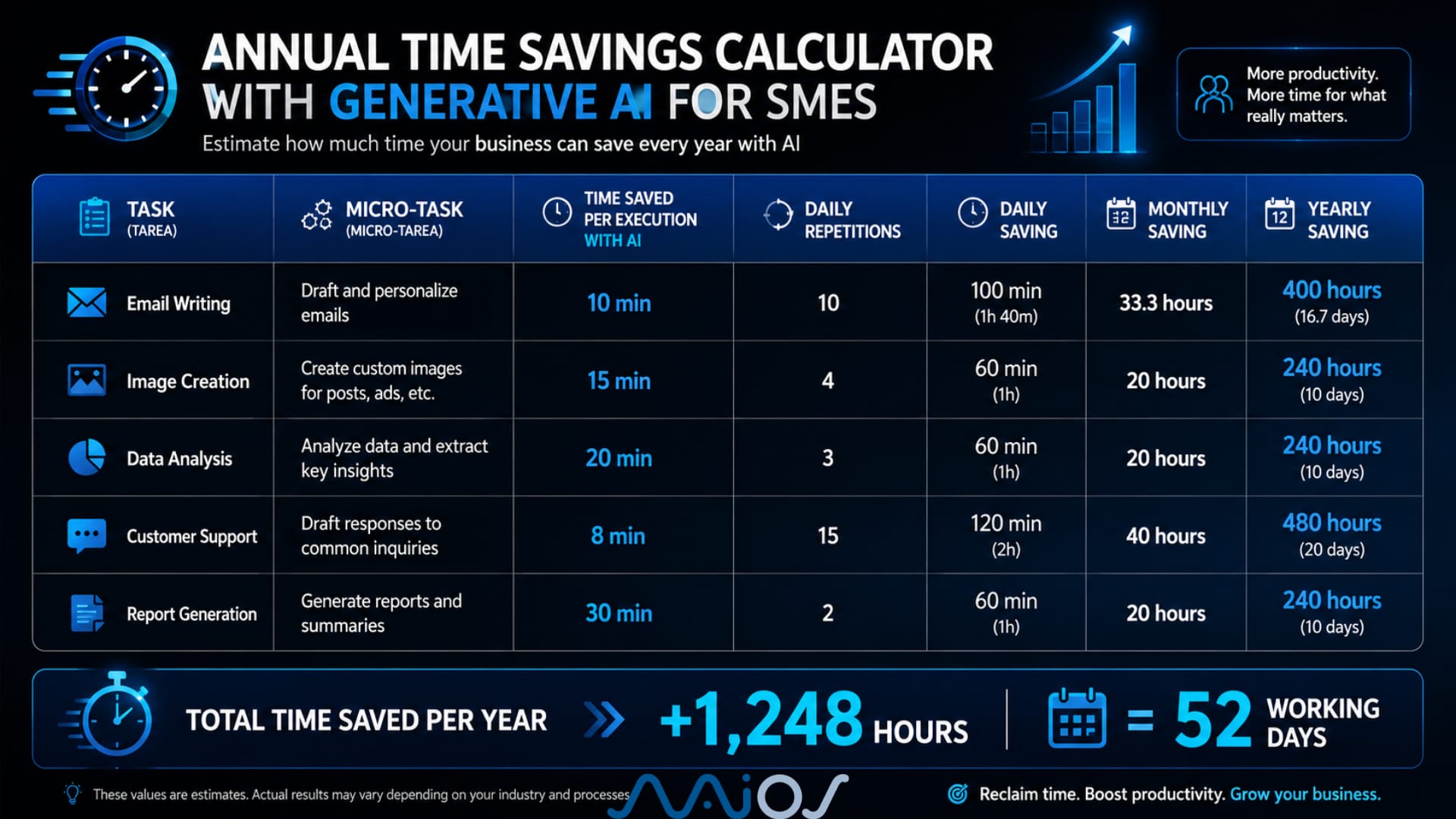
The last step is pure mathematics. Multiply the time saved by the number of times the task is repeated. By adding up all the results of all your team's microtasks, you will discover the true and massive impact of AI on your SME.
To visualize this process, observe the following flowchart of your new productive training plan:
Mathematics that transform your business: A practical example
To understand the real impact of local SEO, GEOGEO (Generative Engine Optimization)The new SEO, optimizing content to be cited by generative AI optimization, and AI, let's look at a common numerical example in any local business or digital SME.
Imagine you have a customer service team that must read complaint emails, categorize them, and draft a base response.
Manual time per email: 6 minutes.
Frequency: 40 emails per day per employee.
Total manual time: 240 minutes (4 hours daily per employee).
Now, we implement NAiOS so it reads the email, categorizes it automatically, and proposes a perfect draft response that the employee only needs to review and send.
Time with NAiOS per email: 1 minute (review).
Time savings per microtask: 5 minutes.
Frequency: 40 emails per day.
Daily savings: 200 minutes (3 hours and 20 minutes daily).
If we multiply this by 22 working days per month, we are talking about a savings of more than 73 monthly hours per employee.
That is the true power of Artificial Intelligence. It is not a big red button that does all the work by magic; it is the systematic and constant sum of small time savings in repetitive tasks. Those 73 saved hours can be allocated to high cognitive value tasks: improving service, thinking about new marketing strategies, closing more complex sales, or simply improving the team's quality of life.
Conclusion: Start training your company today
Don't let the frustration of the "first day at the gym" keep you away from the most important technological revolution of our era. Artificial Intelligence is not reserved only for large Silicon Valley corporations; it is a democratized tool that SMEs can and must use to compete on a large scale.
Start small. Identify three microtasks in your company today. Calculate how much time they take from you per month. Implement NAiOS to optimize them and be consistent. When you see the results at the end of the month, your company will be more agile, stronger, and much more productive.
Do you want to take the next step?
If this metaphor has opened your eyes and you want to understand the technical and strategic foundations of this technology, I invite you to read our complete guide on AI
Additionally, I would love to learn about the specific challenges of your SME and discuss innovation. Connect with me and visit our LinkedIn profile to continue the conversation!
Frequently Asked Questions (FAQ)
How long will it take to see real results when implementing AI in my SME?
Just like at the gym, results depend on consistency. If you start by automating daily microtasks with tools like NaiOS, you will begin to notice time savings (results) from the first week. The large-scale financial and organizational impact is usually evident after the first quarter of consistent use.
What exactly is a microtask in a business context?
A microtask is a specific, repetitive, and short-duration action (generally between 1 and 10 minutes) that does not require deep strategic thinking. Common examples include copying data from a PDF to a CRM, classifying emails, generating basic reports, or scheduling appointments. They are the perfect candidates for AI automation.
Why should I use NaiOS instead of trying to do everything manually?
NaiOS is designed to integrate into SME workflows, facilitating automation without requiring months of development. Doing it manually not only consumes your company's most valuable resource (time), but also increases the margin for human error due to fatigue in monotonous tasks.
Does my team need advanced technical programming knowledge to use AI?
No. The gym metaphor applies here as well: you don't need to be a biomechanical engineer to use a weight machine. Current tools like NaiOS are designed with intuitive interfaces (No-CodeNo-Code AIAI tools that require no programming to use or Low-Code) so that any professional, regardless of their technical level, can create automations and improve their daily productivity.
If AI does these tasks, does it mean I will have to reduce my team?
This is a common myth. The goal of automating microtasks is not to eliminate human talent, but to free it. By taking "robotic work" away from your team, you allow them to focus on truly human work: customer empathy, strategy, creativity, and complex problem-solving, which ultimately generates more revenue for the SME.